
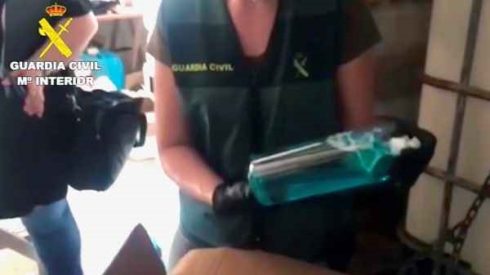
TWO Galician businessmen have escaped imprisonment after admitting to producing 10,000 litres of bogus hydroalcoholic gel which was sold to hospitals and pharmacies.
Prosecutors wanted the two men from Boiro in A Coruña jailed for nine years, but they took a plea deal where they accepted their guilt and were fined €17,520 each and given two-year suspended sentences.
They came up with the scam at the start of the Covid pandemic in April 2020 and produced the fake product on a chicken farm, with the gel containing brandy.
READ MORE:

The two men named as Jose Antonio S. and Juan S. used two official distributors to place the counterfeit gels in hospitals and medical centres across Spain- taking advantage of the urgent need for the product.
Using a chemical company as a front, they made a hydroalcoholic gel without any authority from organisations like the Spanish Medicines Agency.
Prosecutors said that the former chicken farm owners ‘acted with the intention of obtaining an illicit benefit and with full awareness that they were lying’.
The men were fully aware that they were flagrantly failing to comply with the requirements of the law over manufacturing such a product.
The gel lacked the minimum required amount of ethanol (70%)- an ingredient that the duo replaced with brandy with the consequent danger to the health of anybody who used the product.
They set up a clandestine laboratory in an old poultry warehouse where they manufactured, labelled and stored the gel- ready for distribution.
A total of 6,000 litres of gel was sold and another 4,000 litres of the same product- ready for marketing- was seized by the Guardia Civil.
Health centres, pharmacies, hotel establishments, fishmongers, workshops and cafeterias were the most affected by the fraud.
Sample analysis by the National Institute of Toxicology showed it contained a very small amount of ethyl alcohol and a high amount of methanol.
Their ruse started to be rumbled when some pharmacies complained about labels which did not have an expiration date, barcode, lot number or the name of manufacturer.
In seven of the invoices located by the Judicial Police, sales of more than 24,000 euros appear.